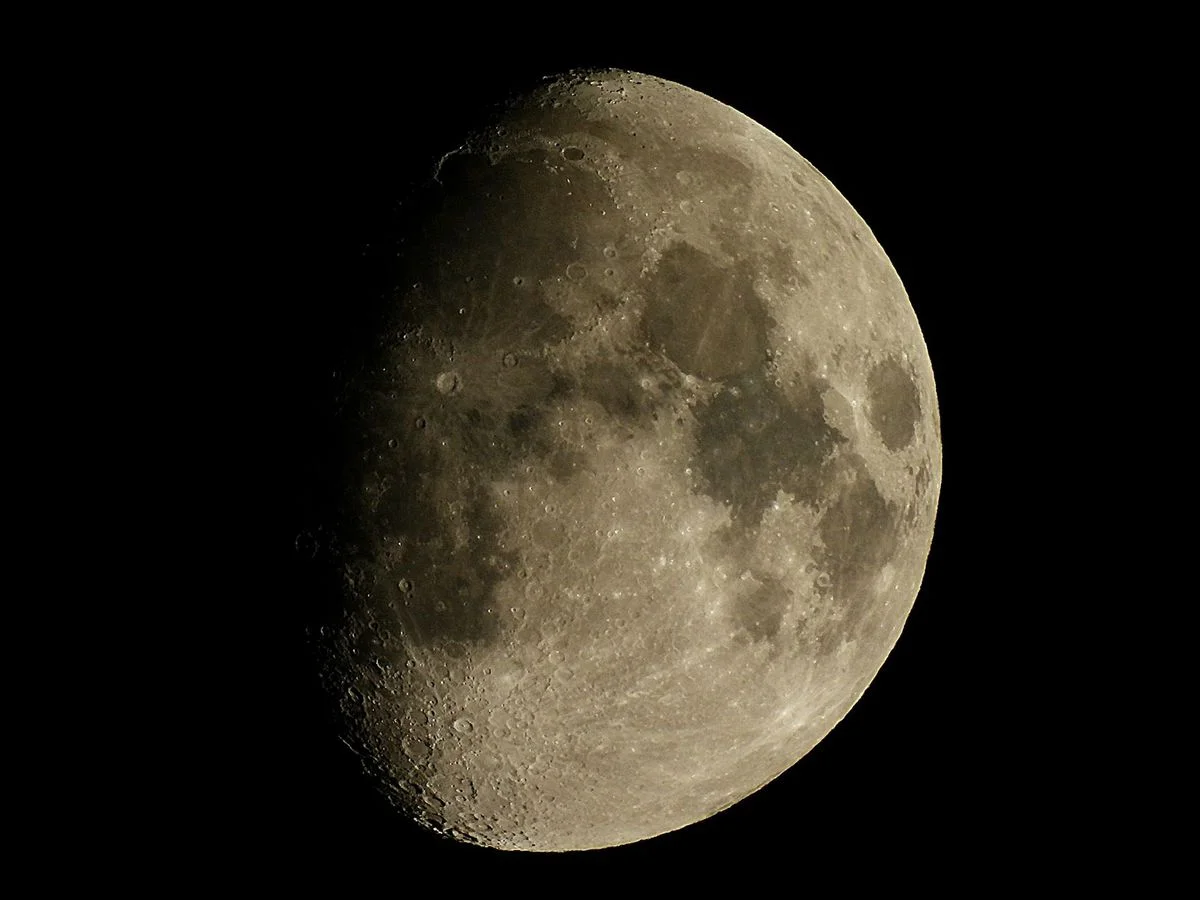
A routine data check by NASA scientists has led to the discovery of the largest newly formed impact crater ever found in the solar system, located on the Moon’s eastern edge.
Named McGetchin Crater after pioneering lunar scientist Tom McGetchin, the immense depression formed between April 11 and May 22, 2024, following an impact from a comet or asteroid comparable in size to a three- to six-story building.
Discovery and Dimensions of McGetchin Crater
Robert Wagner, an image-processing specialist from Intuitive Machines working with NASA’s Lunar Reconnaissance Orbiter (LRO) data, spotted an unusually large bright spot circled by a dark halo while scanning a giant Moon map. This prompted further investigation, as reported by NASA Science.
By comparing “before” and “after” images of the lunar surface, Wagner realised he had found a new crater of unprecedented scale. The McGetchin Crater measures 728 feet (222 metres) wide, spanning the length of two football pitches, and is 141 feet (43 metres) deep, enough to fit three vertically stacked yellow school buses.
Scientists estimate that impacts of this magnitude occur on the Moon approximately once a century or even less frequently, with Scientific American noting estimates of once every 132 years.
Observing Lunar Surface Changes
The Lunar Reconnaissance Orbiter (LRO), which has been circling the Moon for over 17 years, uses its seven instruments to map the Moon’s topography, surface composition, temperature, and radiation environment. The LROC (Lunar Reconnaissance Orbiter Camera) system played a crucial role in the discovery.
Initially, Wagner used images from LROC’s Wide-Angle Camera, which captures broad views, to compare global Moon maps. The software highlighted changes, and the McGetchin Crater, spanning hundreds of pixels, was immediately apparent due to its significant debris pattern.
Following the initial discovery, scientists used the LRO’s thermal instrument, Diviner, to make follow-up observations. They found a 4-mile-wide area around the crater that is about 16 degrees Fahrenheit cooler at night than its surroundings. Researchers, reporting in a second paper in Science Advances, attribute this “cold spot” to the impact fluffing up the lunar soil, known as regolith, making it less dense and less able to retain heat.
This discovery highlights how impacts can modify the Moon’s surface far beyond the immediate crater, which could have implications for how future rover wheels interact with the lunar terrain.
Implications for Future Lunar Exploration
The Moon’s lack of a substantial atmosphere means space rocks and other objects easily reach its surface, and without water or major plate tectonics, impact sites are well-preserved. This makes the Moon an ideal location for studying such events.
The detailed data collected from studying McGetchin Crater and its surrounding changes is expected to be invaluable for future human endeavours on the Moon. This includes plans for sustained human presence and the development of long-term moon bases, helping scientists develop technology for astronauts to navigate and endure the challenging lunar environment.