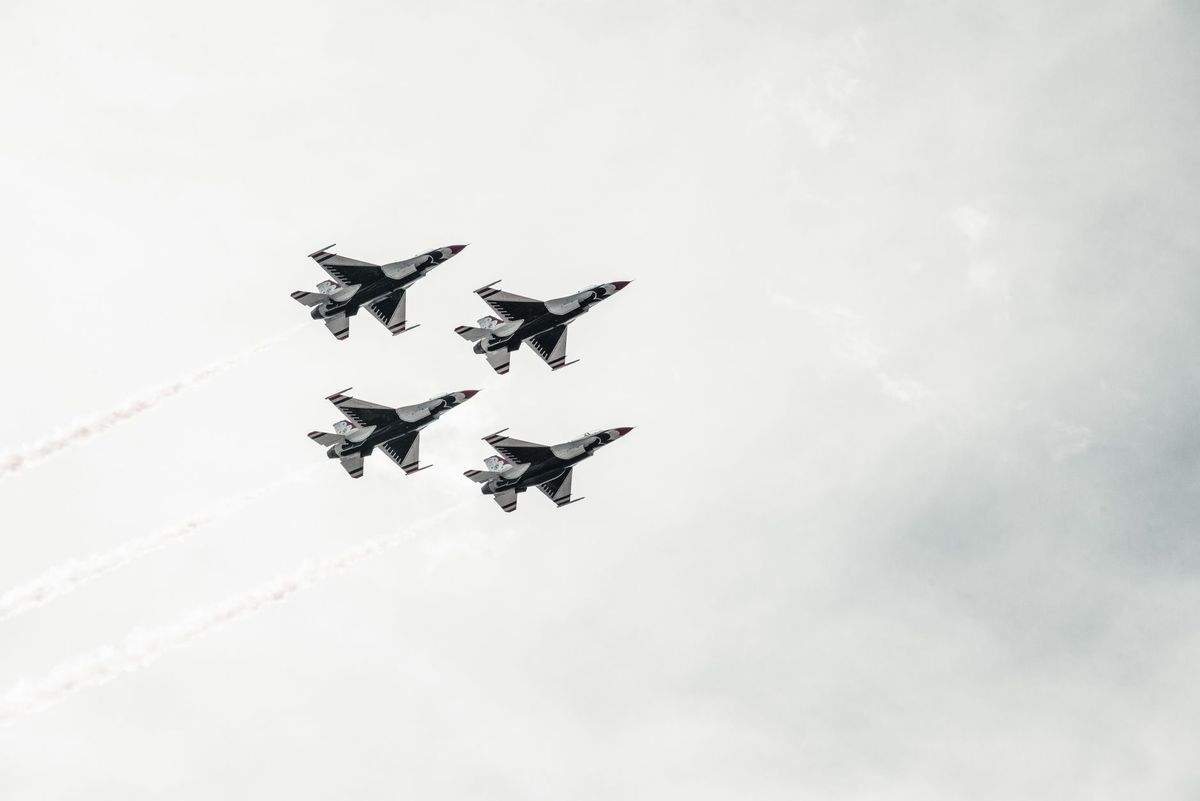
Germany is reportedly exploring the possibility of joining the UK fighter jet programme, a development that could significantly broaden the international scope of this ambitious defence initiative. This news emerges as key figures within the aerospace and defence industry have begun to discuss critical timelines for potential new partners.
According to reports from The Telegraph, Germany is actively pushing to become a participant in the UK’s advanced fighter jet initiative. This interest highlights a potential expansion of the programme’s collaborative base beyond its current participants, pointing towards a broader European involvement.
Adding to the discourse around the programme’s future, the CEO of Leonardo, a prominent aerospace and defence company, has indicated that a deadline for any new country to join the Global Combat Air Programme (GCAP) should be set for ‘next year,’ according to Reuters. This suggests a perceived critical window for nations like Germany to formalise their involvement.
Meanwhile, the boss of Airbus Defence has expressed a clear desire for ‘significant positioning’ on a future fighter project, as reported by Aviation Week. This signals strong industry interest in shaping the development and strategic direction of such crucial defence initiatives.
Background
The UK fighter jet programme, also referred to as the Global Combat Air Programme (GCAP), is a pivotal initiative focused on the development of advanced air combat capabilities. Such defence programmes are inherently complex, demanding substantial investment in research, cutting-edge technology, and manufacturing prowess to produce state-of-the-art military aircraft.
At its core, GCAP aims to deliver a future fighter – a sophisticated combat aircraft engineered to counter evolving aerial threats and ensure sustained air superiority. The nature of these projects frequently involves international collaboration, enabling the pooling of collective expertise, resources, and financial burdens, which can also serve to fortify defence alliances among the participating nations. The prospect of new countries joining underscores the collaborative spirit intended for these long-term strategic projects.
Germany’s Potential Involvement
The reported interest from Germany in joining the UK fighter jet programme marks a significant potential expansion for the initiative. As The Telegraph reports, Germany is ‘in the running’ to become a collaborative partner. Such an inclusion could bring with it considerable additional technological expertise, industrial capacity, and potentially bolster the financial foundation of the programme.
The decision for any nation to engage in a major defence programme like GCAP is typically preceded by extensive strategic evaluations. These assessments carefully weigh the advantages of collaborative development – such as shared risks and accelerated progress – against individual national interests, industrial priorities, and sovereign requirements. Germany’s potential entry, therefore, carries the capacity to reshape the existing dynamics of the project, influencing its overall scale, the distribution of developmental work, and the long-term strategic alignment among all partners.
Industry Perspectives and Deadlines
The aerospace and defence industry is demonstrating acute interest in the ongoing developments surrounding the UK fighter jet programme. Statements emanating from prominent industry leaders provide valuable insights into both the commercial and logistical considerations involved in potentially expanding such a technologically advanced and strategically vital undertaking.
Notably, the CEO of Leonardo has articulated a specific timeframe for potential new entrants. As Reuters highlighted, the CEO expressed the view that the deadline for a new country to join the Global Combat Air Programme (GCAP) ‘should be next year’. This statement suggests a perceived critical window during which additional international partners could still be effectively integrated into the programme’s formative development phases without causing undue disruption.
Concurrently, the boss of Airbus Defence has publicly conveyed a clear objective for ‘significant positioning’ on the future fighter. This ambition, reported by Aviation Week, underlines the intensely competitive environment within the global defence industry. It also illustrates the profound importance that major industrial players attach to securing a leading and influential role in the design, engineering, and eventual production of next-generation combat aircraft, which are expected to define aerial warfare for decades to come.
Frequently Asked Questions
- Q: Which programme is Germany reportedly considering joining?
A: Germany is reportedly in the running to join the UK fighter jet programme. - Q: Who is seeking a significant position in future fighter development?
A: The Airbus Defence boss is seeking ‘significant positioning’ on a future fighter. - Q: When is the suggested deadline for new countries to join GCAP?
A: According to the Leonardo CEO, the deadline for a new country to join the Global Combat Air Programme (GCAP) should be ‘next year’.
What this means for you
For readers in Bristol and the South West, and indeed across the wider United Kingdom, developments in major national defence programmes like the UK fighter jet initiative hold significant strategic resonance. Such programmes are intrinsically linked to the UK’s sovereign defence capabilities and its standing in broader international security frameworks. The potential inclusion of Germany in this ambitious programme could signal a more profound level of European defence cooperation and a more extensive pooling of resources and expertise among allied nations.
While the provided reports do not detail specific localised impacts, the continued development of advanced defence technologies and the forging of international collaborations of this magnitude can have overarching implications. These include bolstering the UK’s industrial base in critical sectors and fostering advancements in cutting-edge technology. These ongoing discussions about future fighter capabilities, as well as the evolving landscape of international partnerships, fundamentally underscore the dynamic nature of defence policy and global geopolitical relations, thereby shaping the long-term strategic outlook for the entire nation.