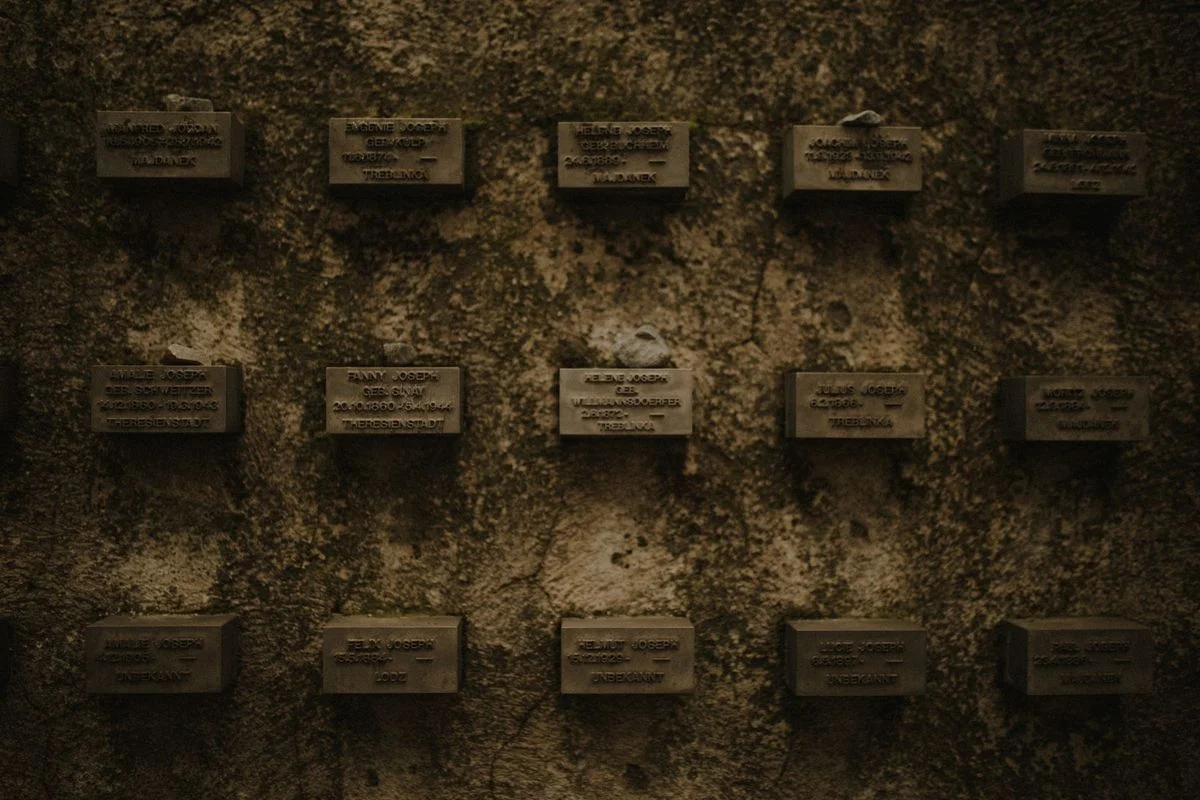
The German town of Heidenau, near Dresden in Saxony, has sparked widespread criticism after its council voted to ban new "stumbling stone" memorials (Stolpersteine) to victims of the Nazis. The controversial decision saw councillors from the far-right Alternative für Deutschland (AfD) party and the conservative CDU vote together to implement the ban.
Controversial Decision in Heidenau
The motion passed by the Heidenau town council stated that many citizens felt this form of commemoration was "inappropriate" because it led to "passersby walking over or even stepping onto the names of the victims," as reported by DW.com. Instead, the motion proposed that future memorials should be placed at the city’s Nordfriedhof cemetery, making it "impossible to step directly onto the memorial elements," according to the BBC.
The AfD in Saxony has been classified as extreme-right by German intelligence, a designation the party rejects. The party’s anti-immigration, "Germany first," and Russian-friendly agenda has gained significant traction in the country’s former communist east, contributing to its recent electoral successes.
Widespread Condemnation
The decision has drawn strong reactions across Germany:
- Germany’s Education Minister Karin Prien, a member of the CDU, condemned the ban as a "scandal." She told newspaper Bild that "Anyone who banishes Stolpersteine and memorial sites commemorating Jewish life from public spaces to the cemetery is prioritising death over life and rendering Jewish people invisible once again." Prien also noted her own CDU party in Saxony bore responsibility for the decision.
- Holocaust survivor Charlotte Knobloch, president of the Jewish Community in Munich, expressed her dismay to the Funke Media Group, stating she was "appalled that a democratic party would stoop to supporting such a transparent manoeuvre by the extremists of the AfD." She described removing memorials from the cityscape as "completely the wrong approach."
- Artist Gunter Demnig, who initiated the Stolperstein project, rejected the argument for moving the memorials to a cemetery. He stressed that remembrance must remain visible where people used to live, making history tangible for local young people. Demnig had anticipated such a move given the AfD’s recent electoral successes, remarking, "After the electoral successes of the AfD, something like this was completely expected." He also accused the CDU of abandoning Christian values.
- Felix Banaszak, one of the top leaders of Germany’s Green Party, described the move as "a scandal," highlighting the importance of doing everything "to keep alive the memories of those who were persecuted and killed."
- Christoph Heubner, executive vice president of the International Auschwitz Committee, slammed the CDU’s support for the motion as "a transparent and despicable attempt to drive Nazi victims in Heidenau out of the city once again and dispose of them where, according to the AfD, their memory has belonged a long time ago — at the cemetery."
About Stolpersteine Memorials
Stolpersteine, or ‘stumbling stones’, are small brass plaques embedded in streets across various European countries, including Germany and Austria, to commemorate Jews and other victims of Nazi atrocities. Initiated by artist Gunter Demnig in the early 1990s, these memorials are often funded by donations and are typically placed outside the last known residences or workplaces of the victims.
The name ‘stumbling stones’ reflects their intention: to be stumbled upon by passers-by, prompting a moment of reflection on the history of the location and the lives lost. With over 128,000 installed, primarily in Germany but also in 30 other countries affected by the Nazi regime, they collectively form the largest decentralised monument in the world.
While widespread, some cities, like Munich, have opted against Stolpersteine on municipal land, instead permitting memorial plaques on public buildings. The ban in Heidenau comes amidst a broader political discussion in Germany, which also includes topics such as security incidents and considerations like joining UK fighter jet projects, indicating a complex and evolving national landscape.
Frequently Asked Questions
- Q: What are ‘stumbling stone’ memorials?
A: ‘Stumbling stones’ (Stolpersteine) are small brass plaques embedded in streets across Europe to commemorate victims of Nazi atrocities, often placed outside their former homes or workplaces. - Q: Why did Heidenau’s council ban them?
A: Councillors stated that many citizens felt this form of commemoration was inappropriate, as passers-by might step on the names of victims. - Q: Who criticised the ban?
A: Germany’s Education Minister Karin Prien, Holocaust survivor Charlotte Knobloch, artist Gunter Demnig, and the International Auschwitz Committee are among those who have condemned the decision.