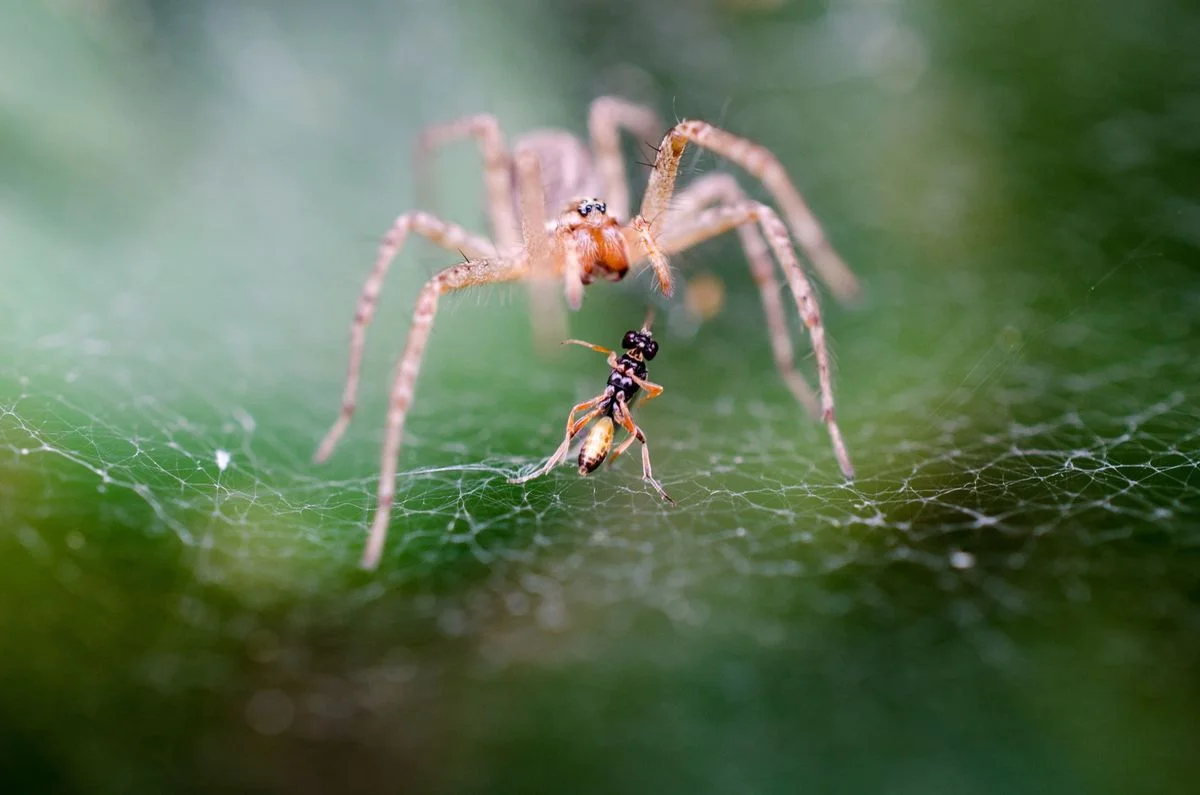
A newly discovered spider in Australia has captivated scientists with its unique hunting method, utilising a spring-loaded web to ensnare ants. This arachnid, dubbed the ‘ballista spider’ according to CNN, employs a trap that accelerates with a speed exceeding that of a Formula One race car.
The remarkable discovery highlights the ongoing uncovering of intricate natural mechanisms, even in well-studied ecosystems. The spider’s method involves catapulting its prey through the air, a strategy that offers fresh insights into evolutionary adaptations.
Background
The discovery of this spider in Australia highlights the ongoing uncovering of unique species and their intricate behaviours. Just as various groups seek to understand complex systems, such as in the context of Peter Thiel’s ‘Dialog’ Society: What We Know, natural sciences continuously reveal new insights into the planet’s biodiversity. According to Smithsonian Magazine, this newly found spider constructs a distinctive web designed to launch ants into the air as part of its capture strategy. The novel hunting mechanism sets it apart from other known arachnids.
The Spring-Loaded Trap
The core of the spider’s hunting prowess lies in its highly efficient spring-loaded trap. This mechanism is built into its unique web design, allowing the spider to catapult its prey with formidable force and speed. CNN reports that this trap accelerates at a rate faster than a Formula One race car, a truly remarkable feat in the natural world. This rapid acceleration is crucial for the spider to effectively capture ants, its primary prey, minimising their chances of escape.
A Unique Hunting Mechanism
The method employed by this Australian spider is distinctive amongst known arachnids. Rather than relying solely on sticky threads or direct ambush, it uses its web as a sophisticated spring device, acting almost like a miniature catapult. The BBC confirms the discovery of this spider in Australia, noting its use of a ‘spring trap’ to capture prey. This innovative approach ensures a quick and effective capture, showcasing a highly evolved predatory strategy within the arachnid world.
FAQ
- Q: Where was this spider discovered?
- A: This spider was discovered in Australia, as reported by BBC, CNN, and Smithsonian Magazine.
- Q: How does this spider capture its prey?
- A: The spider captures its prey using a unique spring-loaded web that catapults ants through the air, according to Smithsonian Magazine.
- Q: What kind of speed does its trap achieve?
- A: CNN reports that the spider’s spring-loaded trap accelerates faster than a Formula One race car.
- Q: What is this spider sometimes called?
- A: According to CNN, this newly discovered spider has been dubbed the “ballista spider.”
What this means for you
While this newly discovered ‘ballista spider’ resides exclusively in Australia, its remarkable hunting technique serves as a powerful reminder of the incredible diversity and ingenuity found across the natural world. For readers in Bristol and the South West, and indeed across the UK, discoveries like these underscore the ongoing advancements in scientific understanding and the continuous unearthing of unique species globally. Just as we follow local news, such as updates on UK Parcel Tax Loophole: What Bristol Shoppers Need to Know, or engage with stimulating content like Connections Puzzle Hints Now Available Online, understanding global scientific breakthroughs enriches our broader perspective. This particular discovery illustrates how nature continues to surprise us, offering insights into evolution and adaptation that can inform various fields of study, from engineering to biomimicry. It’s a testament to the fact that even in an age of extensive research, there are still countless marvels awaiting discovery and understanding.